Day trip from Porto — some ideas
If you are planning trip in Portugal that includes a few days in Porto, the natural question arises: what is there to see near the city, and what excursions can you take from there
After a guided tour of Porto and a visit to the port wine cellars, you can set off to explore the towns and places in the surrounding area. Here is a list of the most popular one-day trip destinations, assuming you have a car or a guide with a car. Please send us a private message, and we’ll clarify anything that isn’t clear.
Braga, park Bom Jesus and Guimarães
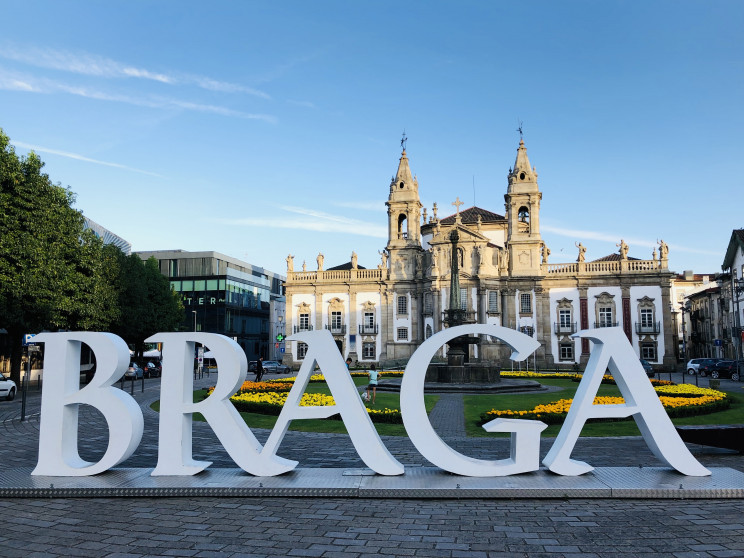
Braga is regarded as the ‘Portuguese Vatican’ and is home to Portugal’s oldest cathedral. The parents of Portugal’s first king are interred in this cathedral. There are many churches and sites dating from the Roman period, whilst the entire historic centre is home to cafés, restaurants and small shops. Braga is striving to become Portugal’s fashion capital, so be sure to set aside some time for a spot of shopping!
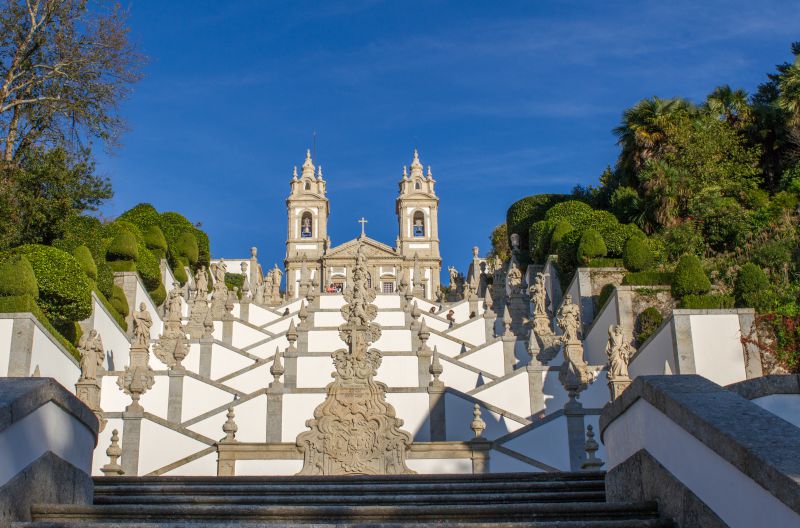
On the outskirts of Braga lies the Bela Jesus do Monte park and architectural complex, a popular pilgrimage site in the 18th and 19th centuries and a UNESCO World Heritage Site. Park your car in the lower car park and take the funicular up, then walk back down through the park. If you prefer, you can do it the other way round: walk up like a pilgrim and take the funicular down.
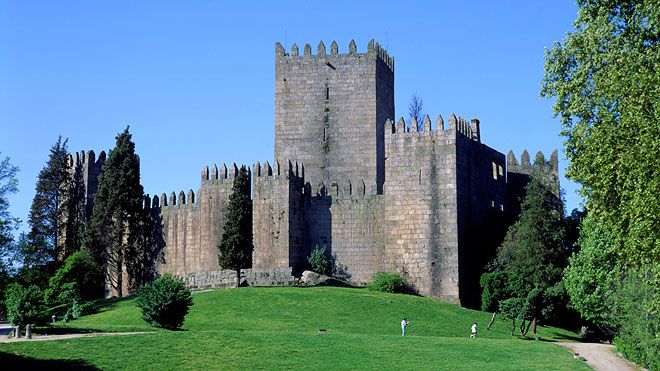
Guimarães is a fine example of a medieval town that has preserved its traditional architecture and street layout, and is listed as a UNESCO World Heritage Site. The city is considered the ‘cradle’ of Portugal, the place where the events leading to the formation of an independent Portugal took place.Some people like to call the city the first capital, a view with which we disagree. A visit to the historic centre of Guimarães and the fortress is an absolute must – this is where Portugal was born!
You can read a description of our tour here: The Cradle of Portugal
Coimbra+ Bussaco forest or the sparkling wine estate
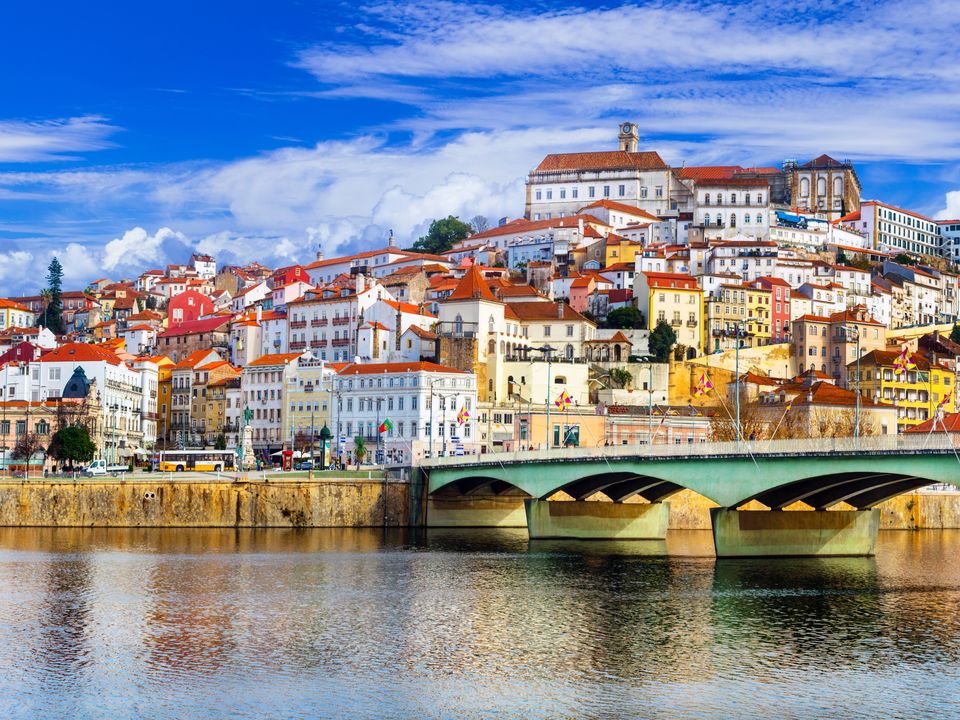
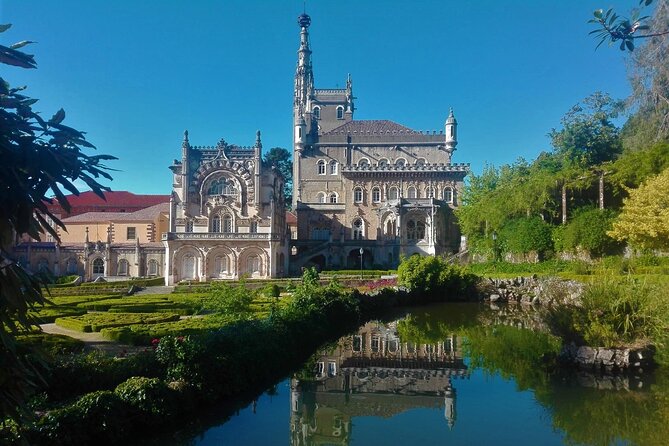
First of all, head to Portugal’s first official capital, the city of Coimbra. Leave your car in the car park and take a taxi or Uber up to the university – this will save you time and energy, and you’ll thank us for it later! Visit the former royal palace, now a palace of learning, as it is home to the country’s oldest university and one of the oldest in Europe. Everyone wants to see the most beautiful university library, and it’s well worth a visit! Tickets to the university’s historic buildings can be bought in advance online or on the spot at the ticket office. As you make your way down through the old town back to your car, visit the Old Cathedral and the Church of Santa Cruz, where the first two kings of Portugal rest in beautiful carved stone tombs.
For lunch, head to Mealhada, where they serve delicious suckling pig roasted on a spit in a wood-fired oven(leitão), or you can have goat stewed in red wine (chanfana) in Coimbra.
After lunch, you can visit a winery where bottles of sparkling wine are aged in the cellars using the traditional Champagne method. If you’re not a fan of wine, head off for a walk in the Bussaco Forest. The history of this place dates to the 17th century with a monastery, which was partially demolished to make way for palace-hotel.
A description of our walking tour of Coimbra can be found here: A Tour of the City of Knowledge
A selection of interesting facts about Coimbra can be found here: Interesting Facts about Coimbra
AVEIRO, COSTA NOVA, the fortress at SANTA MARIA DA FEIRA
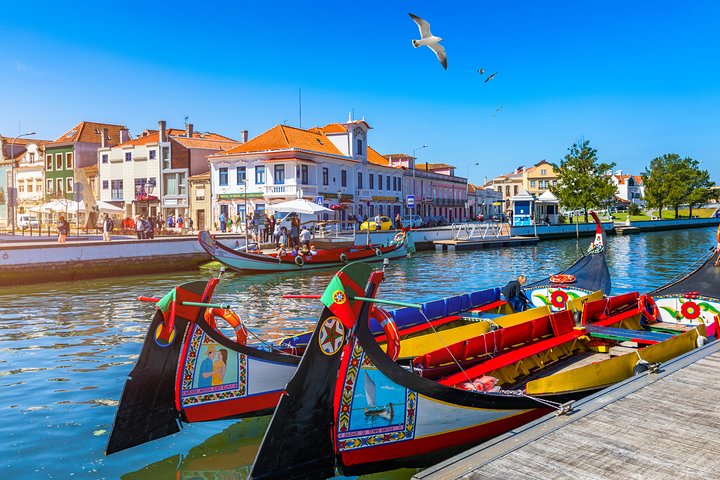
Aveiro is a small, colourful, flat town on the banks of a lagoon, where salt is extracted and oysters (you can visit an oyster farm), clams and eels are farmed. Take a boat trip along the town’s canals or stroll through the historic centre, and enjoy a coffee with the local sweet treat, ‘ovos moles’.
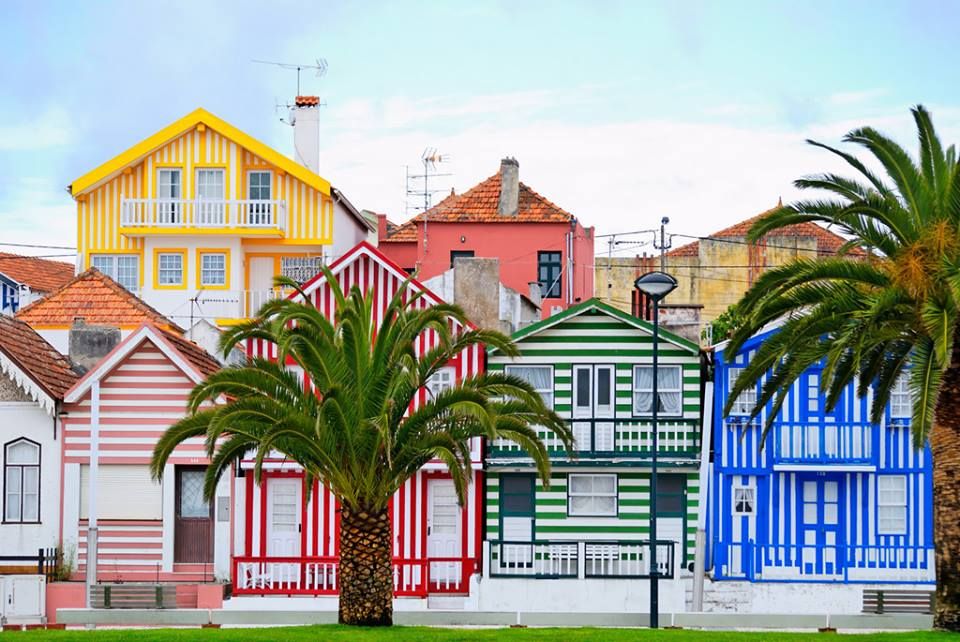
Then head to the coast to the village of Costa Nova to admire the striped houses and breathe in the sea air. If you’re not put off by the cool water, pop down to the beach in the village of Barra. For lunch, try a hearty fish soup made with eels (caldeirada de enguias), some small coastal prawns or persebes. Spend an hour or so at the Maritime Museum in Ílhavo. Where else can you see a huge tank full of live cod fish – the queen of the Portuguese table – and learn how it used to be caught!
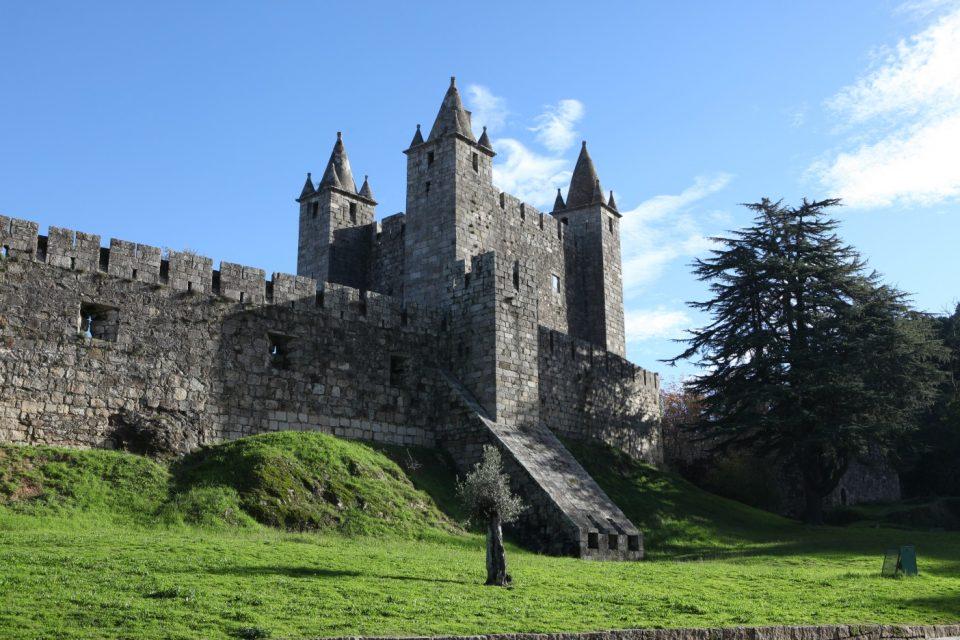
On the way back to Porto, if you’re feeling up to it, visit the Fortress of Santa Maria da Feira to take some lovely photos with it in the background.
Find details of the tour to Aveiro and a sparkling wine winery or the Bussaco Forest here: A delicious tour of Aveiro
The longest SUSPENSION FOOTBRIDGE in Portugal
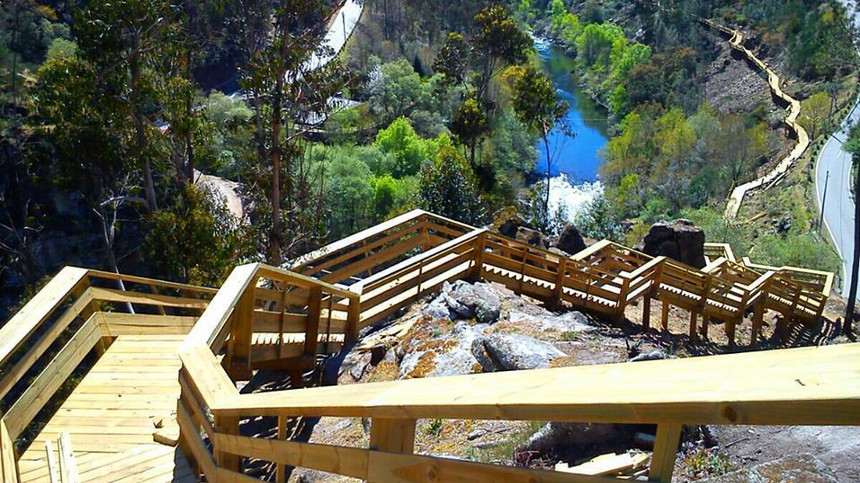
In the Arouca Geopark, you can stroll along 8 km of footpaths beside the Paiva mountain river, and to round off your walk, you can cross Portugal’s longest suspension footbridge, the Ponte Arouca 516, which spans the mountain river at a height of 175 m. Find out more about how to get there and ticket prices here: Everything you need to know about the Ponte Arouca 516
Our tour can be available, by request
Douro Valley
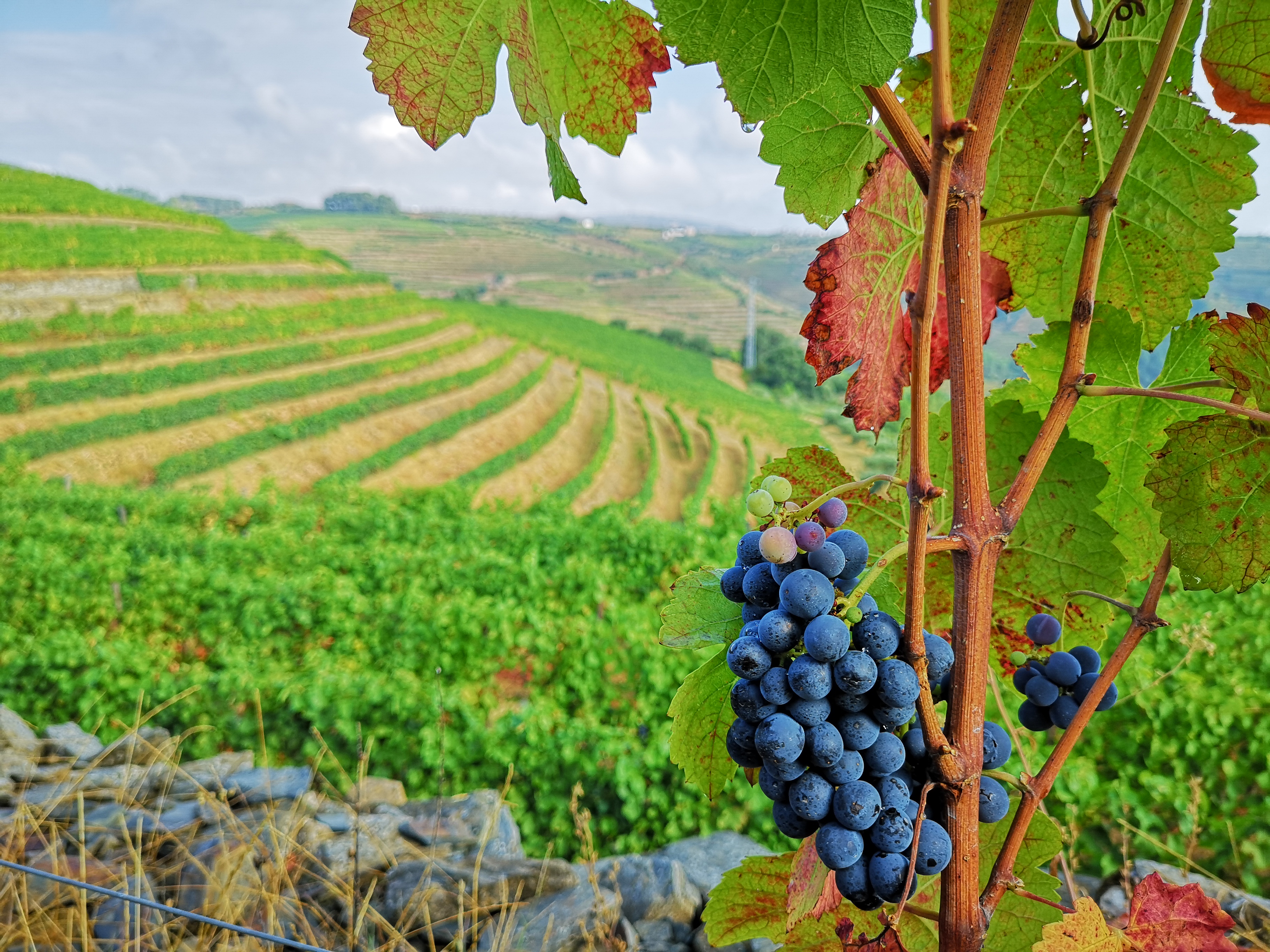
Along the river Douro, 100 km upstream from Porto, towering hills stand guard; through titanic efforts, people have transformed them into vineyards. Pop into one or two wineries and enjoy some dry wines and port. There are river cruises available! Ideally, it’s best to spend the night in the Douro Valley so you can take your time and truly enjoy feeling as though you’re in paradise, take plenty of photos from the viewing points, and have a leisurely dinner or lunch with a view of the river and the hills covered in stands of vineyards.
A description of our tour of the Douro Valley can be found here: A Tour of the Birthplace of Port Wine
Amarante, Mateus Palace, Aveleda Estate
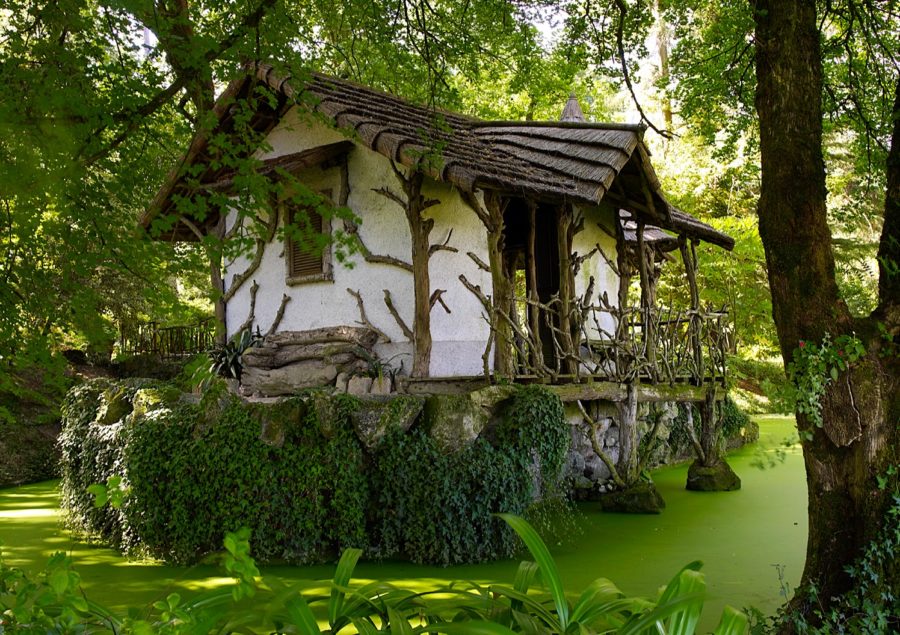
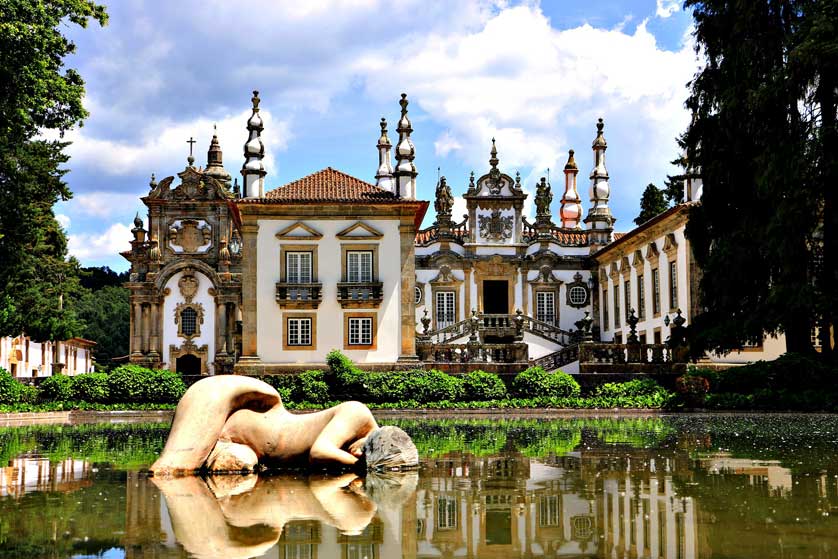
The Aveleda Estate is, first and foremost, a park of incredible beauty dating from the Romantic era, featuring a tea house on the pond, a goat shed, and a selection of trees and shrubs. Add to all this splendour the production of ‘green wine’ and cheese, which you can and should sample after a short tour with a local guide. Booking is mandatory!
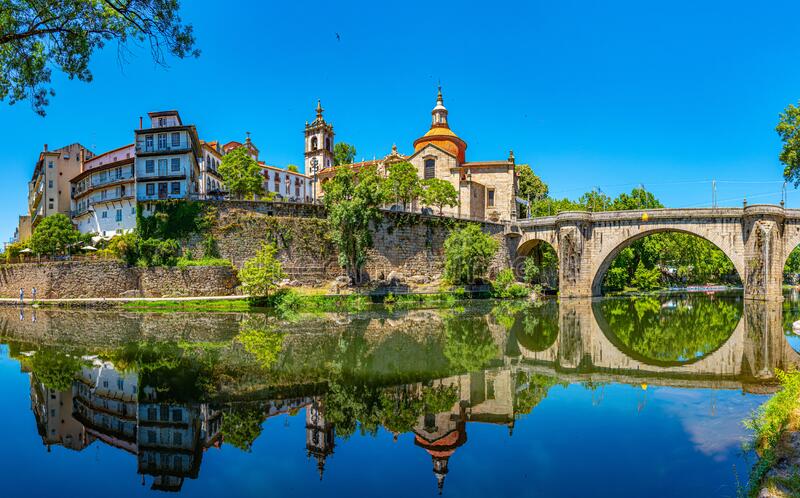
You can round off the day with lunch and a stroll through the town of Amarante. Young women turn to the local saint, Gonçalo, when they struggle to get married, and in his honour, the local biscuits are rather risqué in shape. The main attractions are the Church of St Gonçalo, the bridge over the River Támega and the local ‘tascas’ (taverns).
After lunch, head to Mateus Palace (in Vila Real); take a stroll through the palace grounds, and if you have the time and energy, visit the palace itself with a local guide.
Our tour can be available, by request
Viana do Castelo, Ponte de Lima, Barcelos
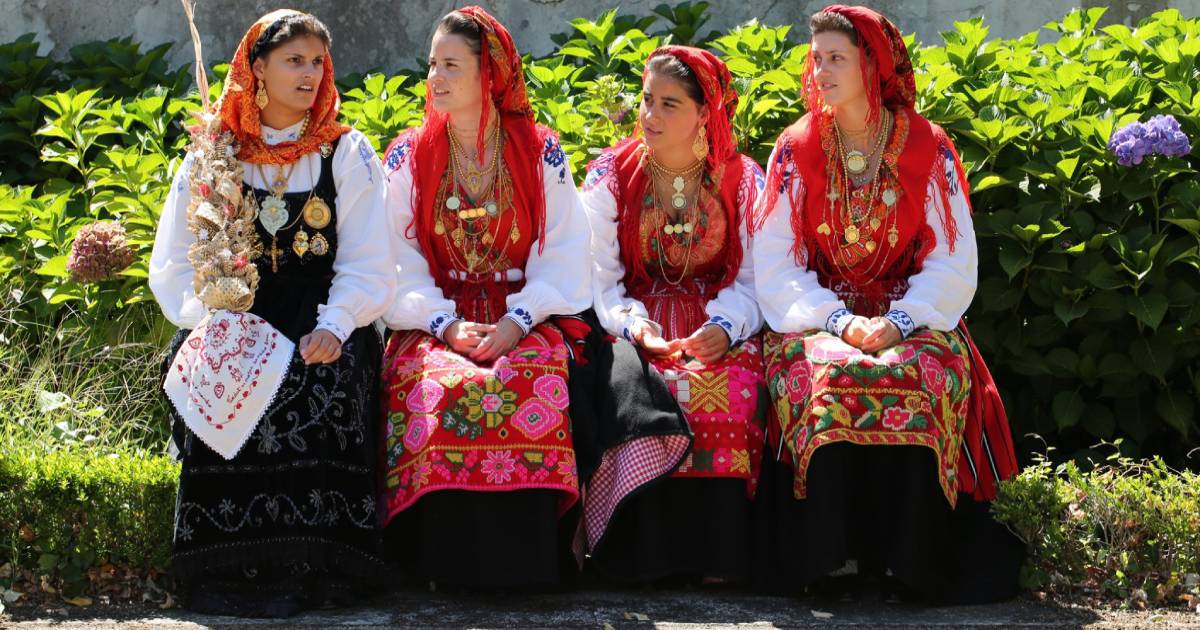
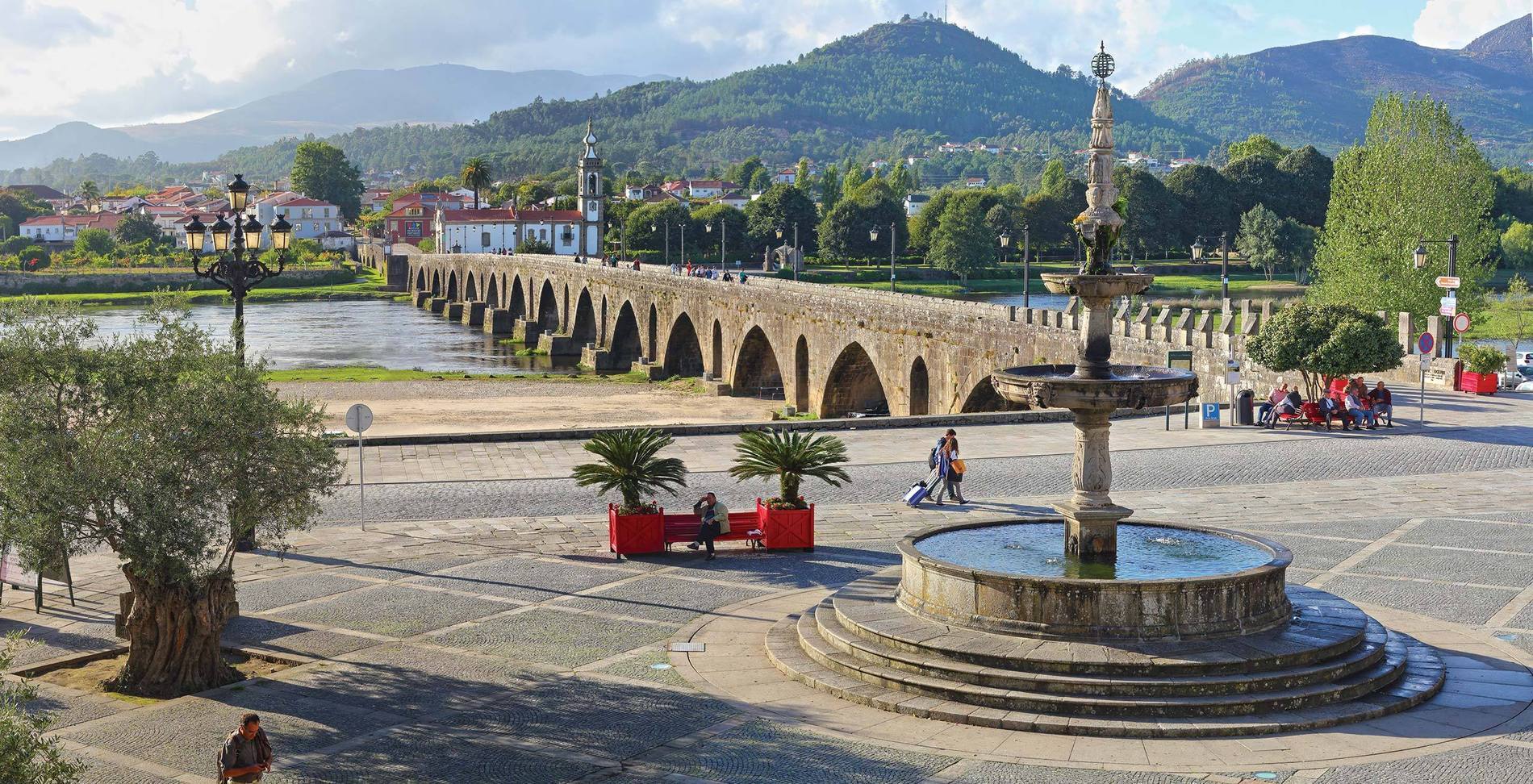
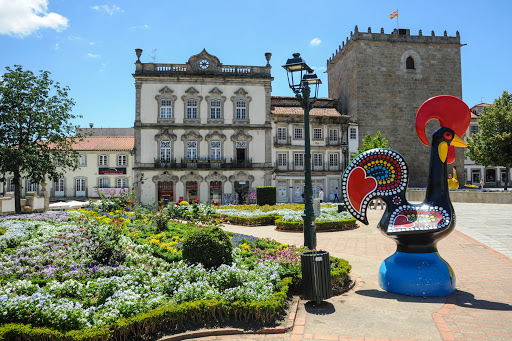
Head north, towards the border with the autonomous Spanish region of Galicia. Ponte de Lima is a charming provincial town on the River Lima. Take a stroll across the bridge over the river, which is used by pilgrims heading north along the Camino de Santiago to the relics of St James the Apostle. In summer, pack your swimwear – there’s a municipal beach on the river where you can have a dip if you fancy it. In the town, you can also visit the ‘Vinho Verde’ Museum to find out more about this drink.
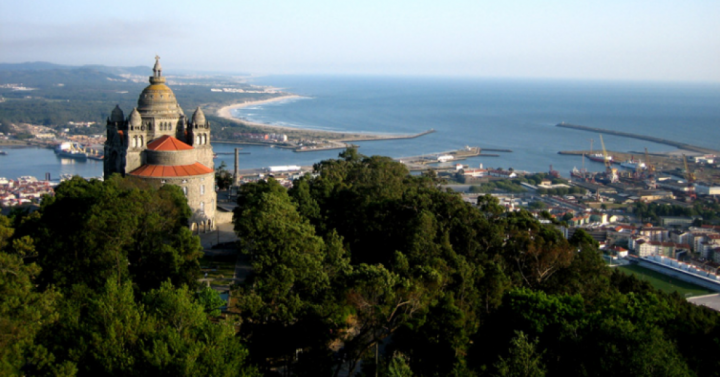
The town of Viana do Castelo is famous for the views and architecture of the Sanctuary of the Sacred Heart of Jesus, situated on the high hill of Santa Lucia. If you get the chance, climb up to the roof of the church. In the charming historic centre, which transports you, as if in a time machine, back to the 18th-century Baroque era, have lunch and visit the Dress Museum. You’ll be amazed at the outfits people used to wear to their weddings in this town back in the day!
If you have time to spare, pop over to the town of Barcelos, the birthplace of the very rooster that has become the symbol of Portugal. According to legend, its story is linked to a pilgrim who spent the night in this little town.
Our tour can be available, by request.
Gerês National Park
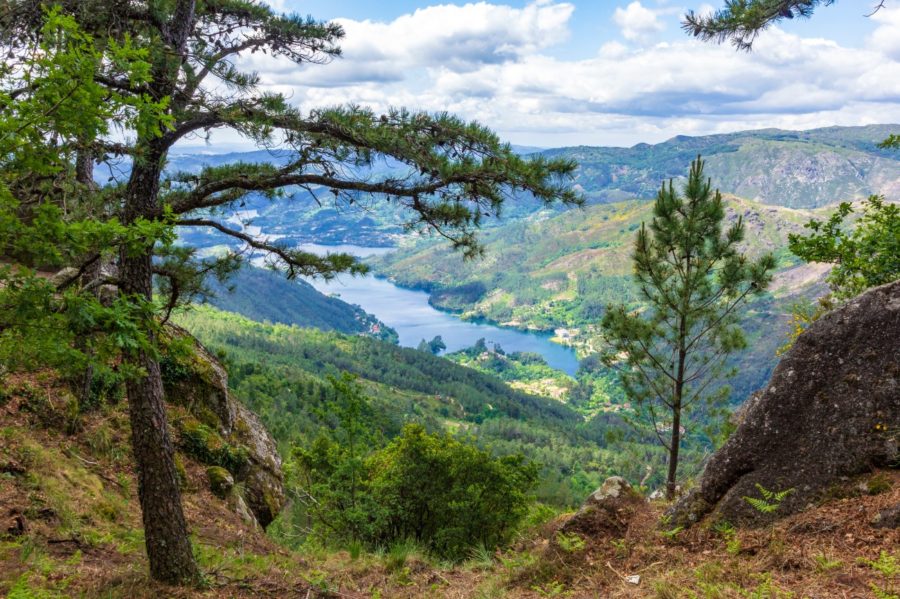
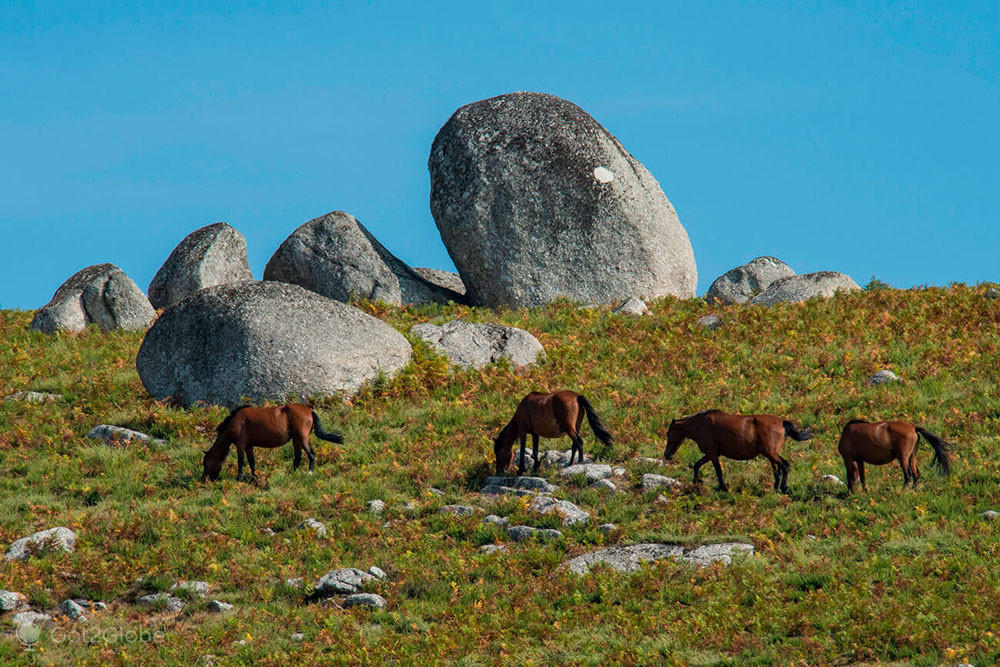
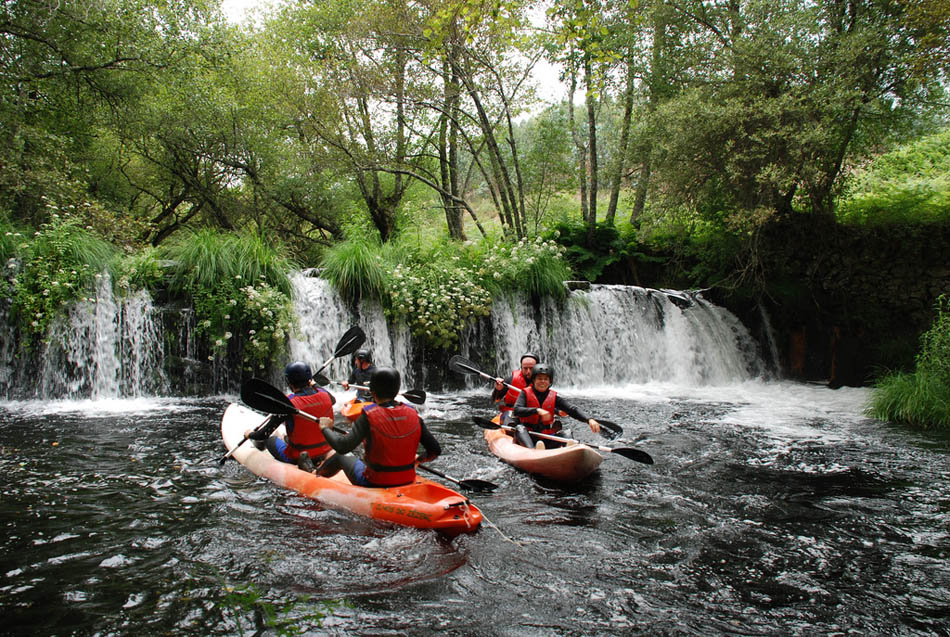
The country’s only national park! The park covers an area of over 70,000 hectares, most of which lies amongst the Penedo and Geres mountains. It features villages tucked away in the mountains, where traditional ways of life are still practised, as well as ancient fortresses, the remains of roads dating back to the Roman Empire, waterfalls, and little bridges spanning mountain rivers, and reservoirs where people swim in the warm water in summer, and viewing points with breathtaking views, and churches where pilgrims on their way to Santiago de Compostela stop to rest, and thermal springs. The park’s greatest treasure is its nature! Native vegetation without mimosas or eucalyptus trees (various species of oak, chestnut, holm oak, pine, strawberry trees and yews), herds of local cows and small mountain horses known as Garran, birds and wolves.
Tours is available, by request.
We’ve written about the local herding dog breed, the Cão de Castro Laboreiro, here: Portuguese dog breeds
Publication date: 12 October, 2026